Air Conditioner Maintenance Tips: Keep Your Split System Running Efficiently
Split System Air-Conditioning: Maintenance, Troubleshooting & Upgrades in Melbourne’s West
When your split system starts struggling, it’s easy to fear the worst. In reality, most breakdowns are preventable with regular maintenance. SES Melbourne services and installs air conditioning systems across Melbourne’s western suburbs, including Altona, Altona North, Newport, Williamstown, Footscray, Yarraville, and surrounding areas. Here’s how to keep your unit running efficiently and when to call in the professionals.
---
Regular Maintenance: Keeping Your Air-Conditioner in Top Shape
Routine care extends the lifespan of your air-conditioner, keeps it efficient, and reduces the risk of sudden failures.
1. Clean or Replace Filters
Filters capture dust, dirt, and other airborne particles so they don’t circulate through your home. Over time, they clog and restrict airflow, forcing the unit to work harder and use more power.
- Reusable filters: Remove and clean monthly.
- Disposable filters: Replace at least every three months.
- High-dust homes, pets, or allergies: Check and clean/replace more frequently.
2. Check and Clean the Coils
Your system’s evaporator and condenser coils absorb and release heat. Dirt build-up on these coils reduces efficiency and cooling capacity.
- Inspect coils annually.
- Gently clean light dust and debris.
- If there is significant build-up or corrosion, this is a job for a licensed electrician or refrigeration technician.
3. Inspect and Clear the Condensate Drain
The condensate drain removes moisture from the indoor unit. If it blocks, water can back up into the unit or ceiling.
- Check the drain line every few months.
- If you see build-up, flush the line with a cup of warm water.
- Persistent blockages or leaks into ceilings should be handled by a professional.
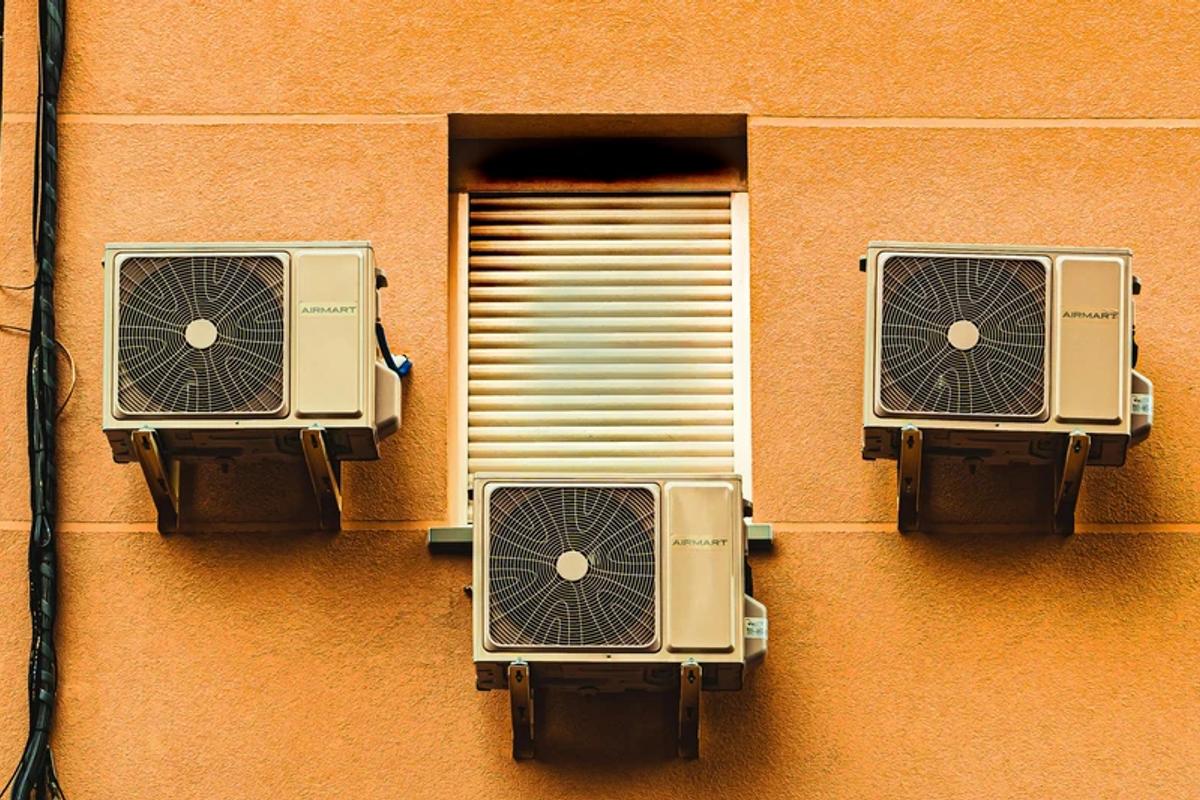
4. Check the Outdoor Unit
Your outdoor compressor needs clear airflow to operate efficiently.
- Trim plants and shrubs back at least 30–60 cm from the unit.
- Remove leaves, rubbish, and other debris.
- Make sure nothing is resting against or on top of the casing.
5. Schedule Annual Professional Servicing
Even with good DIY maintenance, a yearly professional service is essential.
A licensed electrician or refrigeration technician will:
- Check and adjust refrigerant levels (as required by Australian regulations)
- Inspect electrical connections and terminals
- Test capacitors, relays, and safety controls
- Check thermostat operation and system response
- Inspect fans, motors, and drain for wear or blockages
This helps identify issues early, reducing the chance of a mid-summer breakdown.
---
Troubleshooting Common Air-Conditioner Issues
Air Conditioner Not Turning On
If your split system won’t start:
- Confirm the power supply is on and the circuit breaker hasn’t tripped.
- Check the isolation switch near the outdoor unit (if fitted).
- Verify the thermostat/remote is set to Cool and the target temperature is below the current room temperature.
- Replace or test the remote batteries.
If the unit still won’t start, contact SES Melbourne. The cause may be a wiring fault, failed capacitor, or control board issue that requires a licensed professional.
Insufficient Cooling
If the system runs but the room doesn’t cool properly:
- Clean or replace filters – clogged filters are the most common cause of poor performance.
- Check that doors and windows are closed and there are no obvious air leaks.
- Ensure airflow is not blocked by furniture or curtains.
- If the system still struggles, it may have low refrigerant or a mechanical fault.
Refrigerant handling is regulated in Australia, so any suspected gas issue must be checked by a licensed technician.
Unusual Noises
Unusual sounds are often an early warning sign:
- Rattling or banging: Usually loose panels, screws, or debris inside the unit. Turn off the unit and visually inspect if safe to do so.
- Squealing or grinding: Often indicates motor, fan, or bearing problems. Turn the unit off and call a professional; running it may cause further damage.
- Persistent clicking: Can point to a faulty relay, capacitor, or control board.
Water Leaking Indoors
Indoor water leaks are almost always related to the condensate drain.
- Check for a blocked drain line and clear it if accessible.
- You can try flushing with a cup of warm water.
- If the leak is significant, recurring, or affecting the ceiling or walls, contact SES Melbourne promptly to prevent further damage.
---
When to Consider Upgrading Your Air-Conditioner
Even with excellent maintenance, every system eventually reaches the point where replacement is more economical than repair.
Age of the Unit
Most split systems last around 10–15 years.
- Older units lose efficiency and may struggle in extreme heat.
- Spare parts for older models can become difficult or expensive to source.
- Modern inverter systems typically use significantly less electricity than 10–15-year-old fixed-speed units.
Frequent Repairs
If you’re calling for repairs every season:
- Add up the total cost of recent and upcoming repairs.
- Compare this with the price of a new, efficient system.
Often, a new installation will pay for itself within a few years through reduced repair bills and lower energy usage.
Rising Energy Bills
If your electricity bills are climbing without a change in how you use your air-conditioner:
- The system may be losing efficiency due to age, wear, or refrigerant issues.
- Newer units carry energy star ratings and advanced inverter technology that can noticeably reduce running costs.
Inconsistent Temperatures
Signs your system may have lost capacity or is poorly matched to your space:
- Some rooms are much warmer or cooler than others.
- The unit runs constantly but never quite reaches the set temperature.
- You notice hot or cold spots throughout the home.
In these cases, upgrading to a correctly sized, modern split system or multi-head system can dramatically improve comfort.
---
Frequently Asked Questions
How often should I service my air conditioner in Melbourne?
- Professional service: Once a year, ideally before the summer cooling season (around November).
- Filter cleaning: Every 1–3 months, depending on usage, pets, and dust levels.
Can I service my air conditioner myself?
You can safely:
- Clean or replace filters
- Clear the condensate drain (if accessible)
- Keep the outdoor unit free of debris and vegetation
Any work involving electrical components, refrigerant, or internal mechanical parts must be carried out by a licensed electrician or refrigeration technician in Australia.
Why is my air conditioner blowing warm air?
Common causes include:
- Dirty filters restricting airflow